Global searching is not enabled.
Skip to main content
If you continue browsing this website, you agree to our policies:
x

Section outline


    • BSc (Hons) Applied Animal Health 

    • We hope this course will be fun, interesting, and challenging, and we're looking forward to meeting you all in September!

      The programme incorporates a range of core and option modules which ensure relevance for students who intend to work in any part of the animal health or veterinary industry. In addition, some option strands will be primarily aimed at Veterinary Nursing graduates, enabling them to develop specialist areas of interest and facilitate progression within practice. 

      You will be encouraged and supported to explore current issues in the industry and are encouraged to investigate particular areas of interest. All modules are closely linked to industry, and students are encouraged to support their learning with appropriate work experience - in fact, many of your fellow students are probably employed in industry. 

      There is a mandatory work experience in the course, and this will link tightly to your modules The college also has close links with zoological collections, rescue centres, aquariums, avian collections and other associated animal based employers, and we arrange a wide range of visits and guest speakers to give you the maximum breadth of expertise!


    • Welcome by Programme Manager | Michelle Chappell

    • Welcome to Duchy Stoke Climsland University Centre, Cornwall College. My name is Michelle Chappell and I am the Programme Manager for the FdSc Animal Health and Management and BSc (Hons) Applied Animal Health courses. I am very passionate about animal health and welfare, with a particular focus on equine and canine species.

      Having grown up in the county of Cornwall and attended local schools and colleges to complete my education, I can genuinely advocate studying here in Cornwall. After completing my studies, it led to work both within parts of the UK and abroad, so returning to work in Cornwall has meant returning to my happy place. Situated between Bodmin Moor and Dartmoor and being a short drive away from some amazing beach,s we are surrounded by vibrant natural landscapes in which a variety of wildlife thrive. I am fortunate to be involved in the structure and delivery of courses that encompass my interests and inspire me to continue researching. Currently, I am actively engaged in research that explores the emotional status of canines used in therapeutic environments.  

      At our campus, I lecture on a diverse range of subjects. These include animal and equine anatomy and physiology, animal behaviour, animal health and disease and various related topics.

      As you embark on your academic journey with us, I encourage you to make the most of your time here at university. Take full advantage of the unique resources available to you, such as the animal science research hub, the future farm and our links to industry. Institutions such as Dartmoor Zoo, Mare and Foal Sanctuary, Screech Owl Sanctuary and the Wolf and Dog Development Centre provide incredible opportunities for hands-on learning and observation of various animal species.

      Additionally, I encourage you to engage in volunteering activities, as they offer invaluable practical experience and a chance to contribute to welfare efforts. Getting involved with these initiatives can enhance your understanding of the field and connect you with like-minded individuals.

      It goes without saying that striking a balance between academic and social life activities is important. Cornwall offers a lively community with plenty of social events and recreational opportunities. Take time to explore and enjoy the local attractions, cultural events and outdoor activities that Cornwall has to offer.

      Again, welcome and I very much hope by the end of your studies, that have been full of light-bulb moments you find a completely different understanding of animals and leave with the thirst to develop further and strive to contribute to this fascinating world of nature.

      Michelle Chapple | Programme Manager FdSc Animal Health and Management and BSc (Hons) Applied Animal Health 
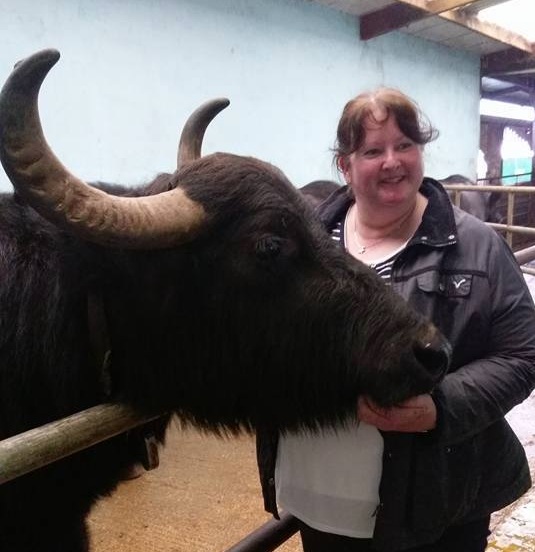

      Michelle Chappell with a buffalo.

    • Joining Instructions

    • Full-time Course Starting September 2026

    • Meet the Team

    • Michelle Chappell | Programme Manager | Email: michelle.chappell@duchy.ac.uk

      Michelle holds a BSc (Hons) in Animal Science and is currently finishing a Research Master's in Biological Sciences, and is a qualified Equine Artificial Insemination Technician. She is also a reviewer for the Clinical Veterinary Behaviour Journal and programme manager for the FdSc and BSc Animal and Equine programmes at Duchy College. 

      She has been involved in equine reproduction research for the past 10 years. Her research interests focus primarily on mammalian reproduction, canine biomechanics, equine, canine and lagomorph behaviour and welfare. She has worked extensively within the industry, having owned numerous animals over her life and enjoys competing her Golden Retrievers at local, national and international levels. Michelle is also the nominated University Federation for Animal Welfare contact person.  
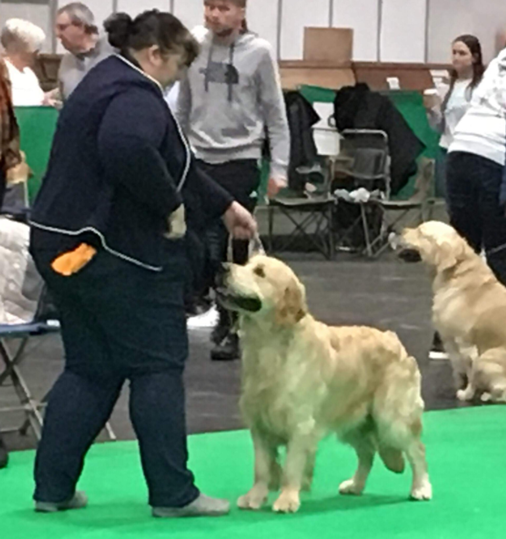

                      Michell Chappell

    • Kelly Bude | Email: kelly.bude@cornwall.ac.uk

      Kelly graduated with a BSc (Hons) in Applied Animal Health here at Duchy, and we’re delighted she’s come back to join us! She is currently teaching on the Level 4 and 5 FdSc in Animal Health and Management programme, and has a particular interest in practical animal health and research skills. 

      Her academic and research focus is on dairy health and livestock welfare, having researched posture analysis in calves in relation to stress response and identification models of bovine mastitis. 

      Kelly has a busy family, but still manages to incorporate downtime with her family pets!
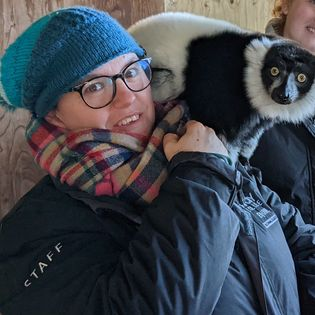

      Kelly Bude

    • Dr David Harris MRCVS | Email: david.harris@duchy.ac.uk

      David qualified from Bristol Vet School in 2005, and has since worked in farm, equine and small animal practice, as well as on the retail and wholesale side of the pharmaceutical industry. A Fellow of the Higher Education Academy, David is interested in evidence-based education, but also works in an educational role in industry alongside his role as lecturer. 

      He is a contributor and editor of the BSAVA Guide to the Use of Veterinary Medicines, and has written a number of educational articles for animal owners and vets. 

      He was appointed a lecturer at Duchy and Bicton Colleges in 2015, and teaches on the Animal Science course and Veterinary Nursing degree courses, with a particular focus on diagnostics, pharmacology and pharmacotherapeutics. He is also a TLA Coach, helping to train and develop teaching staff at the College.
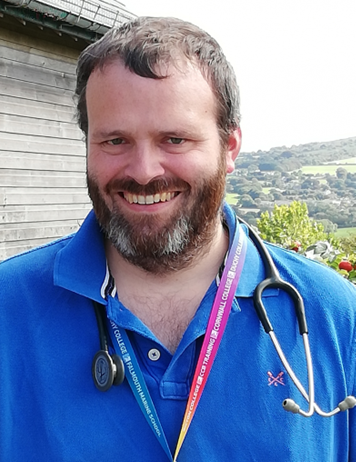

      Dr. David Harris


    • BSc (Hons) Applied Animal Health Modules | What You'll Study


    • Module

      Leader

      Description

      What you'll do

      CORD3000

      Applied Animal Health and Welfare

      CORE MODULE

      David Harris

      This module will explore the principles of general pathology and systemic pathophysiology using a range of clinical examples.  The welfare of affected, in contact and descended animals will be evaluated using common ethical frameworks.  The application of these principles to infectious and genetic disease and their control will be examined in more detail, with a focus on creating and evaluating disease control plans. 

      A series of lectures and seminars exploring the disease states of a wide range of animals, and the impacts those disease states have on their welfare.

      Assessment:

      • Case Report Assignment
      • Presentation and Seminar

      CORD3003

      Resource Management and Leadership

      CORE MODULE

      Kelly Bude

      This module will provide the student with the opportunity to develop and demonstrate appropriate evaluative skills and the ability to synthesize existing and emerging management and leadership practices in order to ensure animal-based resources are managed as effectively as possible.   This module will contain a work-related office-based animal practice expectation.

      An investigation into the theory and practice of business management using lectures, seminars, workshops, visits and guest speakers.

      Assessment:

      • Website design
      • Practical project

      CORD321

      Honours Project

      CORE MODULE

      Michelle Chappell 


      David Harris

      This module allows students to explore in detail an academic subject of their choice.   The module comprises a substantial autonomous research study/investigation.  The students ability to conduct a literature review, design a valid investigation and collect, collate, analyse and interpretation data and to effectively communicate the outcome/s is assessed.

      A series of lectures and seminars on experimental design, data collection, data analysis and interpretation; followed by extended practical time for conducting original research. This is supported by regular one-on-one and group tutorials with your academic supervisor.

      Assessment:

      • Dissertation
      • Viva voce

      CORD3002

      Clinical Animal Behaviour

      Option module - running 2023-24

      Michelle Chappell

      The underlying principles of animal behaviour will be explored using psychological theories.  The application of learning theory and other psychological concepts to the understanding and solving of animal behavioural problems will be examined.  The application of behavioural principles will be also be evaluated in a wide range of training contexts.

      A series of lectures, seminars, practicals and workshops covering the theory and practice of animal behaviour and the development of an individualised positive reinforcement training programme.

      Assessment:

      • Essay assignment
      • Training programme presentation

      CORD3004

      Animal Therapy

      Option module - running 2023-24

      Michelle Chappell

      Complementary therapies are experiencing attention in both veterinary and lay circles worldwide and this module is designed to give the student a detailed knowledge and understanding of alternative therapies. The Module includes an evaluation of the effectiveness of alternative therapy. It explores valid research carried out in other species and humans. It also evaluates the legislation relating to treatment of animals by complementary medicine.  The application of these principles to common disorders and diseases and their control will be examined, with a particular focus on creating treatment plans and evaluating their likely efficacy.

      Following a theoretical introduction to animal therapy and techniques, the module will largely revolve around a series of critical explorations of a wide range of different therapeutic techniques, their legal and theoretical underpinnings and an assessment of their bioplausibility.

      Assessment:

      • Evaluative essay assignment
      • Poster presentation

      CORD3006

      Emergency and Critical Care Veterinary Nursing

      Option module - only open to qualified RVNs

      David Harris

      This module will cover the implementation and evaluation of the advanced nursing care of emergency surgical and critically ill medical animal patients, critical care procedures, patient monitoring and the legal and ethical considerations of nursing such patients. It will also cover advanced nursing procedures encountered in veterinary practice.

      Using some lectures but primarily open discussion seminars and reviews of the literature, this module will explore the assessment and ECC management of a wide range of medical, surgical and toxocological emergencies in small animal practice.

      Assessment:

      • Case Study Report
      • Practical real-time oral scenario

      CORD3001

      Applied Veterinary Pharmacology

      Option module - not running in 2023-24

      David Harris

      This module aims to equip students with the skills and knowledge to safely, confidently and legally work with veterinary pharmaceuticals in the treatment, prevention and management of disease of companion, equine and farm animals.  Relevant to any student working in the animal health or animal management industry, it is particularly aimed at preparing them to operate as an Animal Medicines Training and Regulatory Authority Suitably Qualified Person (AMTRA SQP),  and for work in the veterinary, shelter, farm or pet industry.  

      Starting with lectures and workshops to investigate how drugs work in detail, and then exploring individual drug groups through interactive seminars, the course then moves on to seminars, debates and workshops around the legal and appropriate use and supply of a range of drugs.

      Assessment:

      • Written pharmacology exam
      • Practical dispensing exam


    • Kit, Resources and Equipment

    • It's important for the practical sessions to remember that Stoke Climsland is in a relatively wet area of the country, and that many animal-based practicals must take place outside! We also have a range of animal- and laboratory-based practicals, for which you will need to be prepared. 

      Make sure that you have:

      • Waterproof coats
      • Waterproof trousers
      • Yard boots and or Wellington boots

      You will also require a laptop for accessing resources in class, completing assignments and independent study.

    • Reading List

    • Every module has its own specific reading list; fortunately, the library at Duchy College Stoke Climsland is large and well supplied! However, there are certain key texts that you will find very useful:

      • McGavin, M. D., and Zachary, J. F. (2012) “Pathologic Basis of Veterinary Disease” 5th Edn. Missouri: Elsevier Mosby.
      • Cooper, B., Turner, L., Mullineaux, L. (2020) The BSAVA textbook of veterinary nursing. 6th edn. Cheltenham: BSAVA.
      • Horn, R. (2012). The Business Skills Handbook. London: Chartered Institute of Personnel and Development. 

      For the Options Modules:


      Applied Veterinary Pharmacology

      • Rang, H.P., Ritter, J.M., Flower, R.J. and Henderson, G. (2019) Rang and Dale's pharmacology. 9th edn. Edinburgh: Churchill Livingstone.
      • Mosedale, P. and Harris, D. (2023) The BSAVA Guide to the Use of Veterinary Medicines. 3rd Edn. BSAVA (Online ebook).

      Clinical Animal Behaviour

      • Broom D.M., and Fraser A.F. (2015) Domestic Animal Behaviour and Welfare. 5th Edn. UK: CABI Publishing.

      Animal Therapy

      • McGowan, C., Goff, L. (2016) Animal Physiotherapy: Assessment, Treatment and Rehabilitation of Animals. Willey, Blackwell Publishing.

      Veterinary Nursing Emergency and Critical Care

      • King, L. and Hammond, R. (2018) BSAVA Manual of Canine and Feline Emergency and Critical care. 3rd Edn. BSAVA.

    • Extra Expenses

    • There may be residential field courses that you may wish to join, which are not compulsory (Subject to availability), for example, to Costa Rica or South Africa. The prices of these trips will vary, but recent trips have been in the region of £2500 for approximately 2 weeks (inclusive of flights). These trips are purely optional, and there is no expectation or requirement to join them. More information on the International trips will be made available during induction week and group tutorials. There are also local trips offered to students that may require a small deposit.

      You will be involved in a variety of field trips throughout the year, most of which will be free, but occasionally we may ask for a contribution for travel costs or entrance fees. You should budget for approximately £50 throughout the year for these purposes.

    • Recommendations for Reading, Watching and Listening Over the Summer

    • Read

    • Explore the frontiers of science. New Scientist is the world’s most popular weekly science and technology publication. Their website, app, and print editions cover international news from a scientific standpoint and ask the big-picture questions about life and the universe.

    • Watch

    • UFAW is a charity that promotes animal welfare through scientific and educational activity. It provides information, grants, awards, news and events on various topics related to farm, companion, laboratory and wild animals.Explore the frontiers of science. 

    • Watch live webcams of different animals around the world. The series is produced by explore.org, a philanthropic media organisation and a multi-media division of the Annenberg Foundation. Created by filmmaker and philanthropist Charles Annenberg Weingarten to champion the selfless acts of others, inspire lifelong learning and help people fall in love with the world again, explore.org is home to more than 300 original films and a massive library of world-class photography from all over the globe.

    • Listen

    • Discover through TED by searching 'animal behaviour' or 'animal health' and select from the 300+ 15-minute talks.

    • Student Highlights

    • Please take a moment to explore the various field trips that students have enjoyed participating in.

    • Take a look at our dedicated Facebook page to see our student highlights.